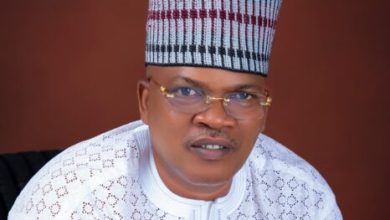
Global economy: Jimoh Ibrahim urges the IMF and World Bank to elevate their responses beyond merely downgrading outlooks

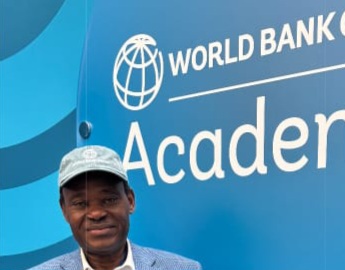
As the spring 2025 auxiliary meetings of the IMF and World Bank conclude in Washington, DC, Nigeria’s Senate Interparliamentary Committee Chairman and Senator for Ondo South have warned that the global economy is facing an uncertain future. This situation threatens innovation and could lead to a worldwide retreat from commitments to globalisation. If this trend continues, a recovery period of ten years or longer may ensue. Ibrahim indicated that the outcome may exacerbate poverty and heighten tensions, potentially resulting in an economic conflict. To address this, he urged world leaders to set aside personal differences and focus on cooperation and economic collaboration instead of power struggles. Senator Ibrahim cautioned that the world is gradually moving towards a financial state of stagnation.
According to Senator Ibrahim, a developing country like Africa will be a victim of growth. “I cannot see any growth in economic outlooks, and the IMF is working on projected data rather than reality because the integrity of their data is weak and lacks legitimacy, particularly as it relates to Africa,” Ibrahim added. Ibrahim stated that cutting projected growth or rescheduling debts is insufficient, advising the IMF to respond beyond merely downgrading outlooks. We must do more to unite nations; international institutions should engage leaders. The world needs a conference table of leaders and genuine engagement.
Senator Ibrahim urges the IMF and World Bank leadership to hold high-level discussions with global economic leaders focused on collaboration. He emphasises that they should approach these meetings not as police enforcers but in a friendly and composed manner, avoiding broad statements or unwarranted comments. No one has designated the IMF as a police enforcer over sovereign nations. It is regrettable that, despite the $50 billion in support from the World Bank, the conflict in Ukraine continues unabated.
There is conflict everywhere in the American economy. We need to reduce domestic tension in Africa for the economy to grow. We must refrain from using the language of economic war in peacetime. Our economy in Africa is frugal. The problem in Africa is a lack of cooperation and countries fighting domestic regional differences, which will further increase economic tension, as we have seen in Kenya.
Ibrahim praised President Tinubu for his bold optimism in progressing despite provocation; he urged the President to “stay committed to his reform agenda and enhance his team’s current knowledge capacity to repeatedly alleviate the strain of busy schedules. “
Senator Ibrahim exited the meeting to participate in the Global South-South dialogue in Morocco, where Senate President Senator Akpabio and other leaders from the Global South-South will discuss strategic innovations to address economic challenges.
Ibrahim praised the IMF/World Bank group for their excellent organisation of the meetings. However, he noted that the office of the global statistician needs to do more.